Ormeau to Coolangatta, Broadwater to hinterland
Excavation and earthmoving on the Gold Coast
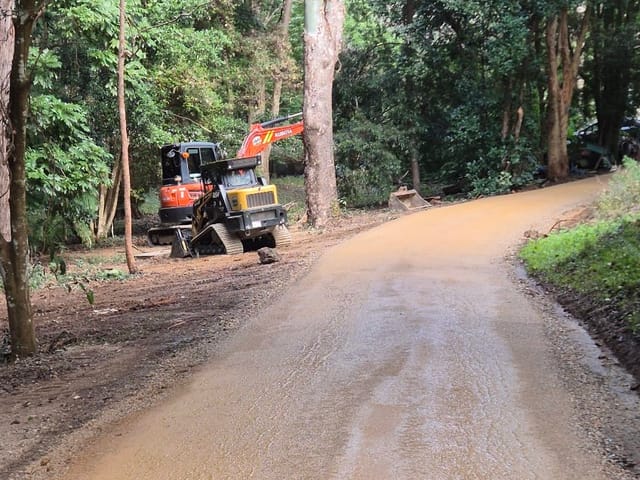
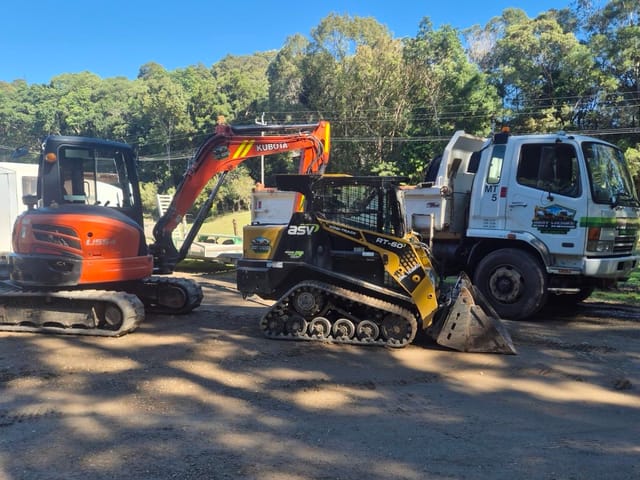
Luke drives up from Murwillumbah with a 5.5 t class Kubota excavator, an ASV posi-track and a Fuso tipper to dig trenches, clear land, pull stumps and cart soil away across the Gold Coast.
Or send the job details online
- Google 5.0 out of 5 from 2 reviews
- Liability and equipment insurance held
- ABN 58 346 068 875
- Owner-operator: wet hire, Luke runs every machine
- Before You Dig lodged, services found by hand
- Quotes and site looks are free
- Owner-operatorLuke, over 10 years operating machinery
- Based in MurwillumbahWorking the Gold Coast to Lennox Head
- Insurance heldLiability and equipment, certificate on request
- Google 5.0 out of 5From 2 reviews, October 2026
- ABN 58 346 068 875Registered business name DIRT WERKS
Gold Coast earthmoving with the owner on the controls
Luke runs Dirt Werks as an owner-operator from Murwillumbah. He drives up to the Gold Coast with a 5.5 t class Kubota U55-4 excavator, an ASV RT-60 posi-track and a Fuso Fighter tipper that carries about 7.5 t a load. Every machine comes with Luke operating it, so the person who looks at your photos and quotes the job is the one who digs it. If you want excavator hire, a digger or a posi track with an operator on the Gold Coast, that is how it works.
On the Gold Coast, Luke takes on excavation and earthmoving: trenches dug and backfilled for your plumber or electrician, trees and stumps taken out at the owner's request, soil and rubbish loaded and carted away, and machine hire with him in the seat. He covers the northern suburbs, the Broadwater and central Gold Coast, Nerang and the western hinterland, and Robina and Mudgeeraba down to the southern beaches at Coolangatta.
Gold Coast jobs Luke takes on
Excavation and earthmoving, from the northern suburbs to the southern beaches.
Excavator and posi-track hire with Luke operating
The 5.5 t class Kubota U55-4 digs and loads, and the ASV RT-60 posi-track spreads and levels soil. Wet hire only, so Luke runs the machine. Attachments include buckets, an auger for post holes, a grab and a compaction wheel.
See moreTrenches dug and backfilled
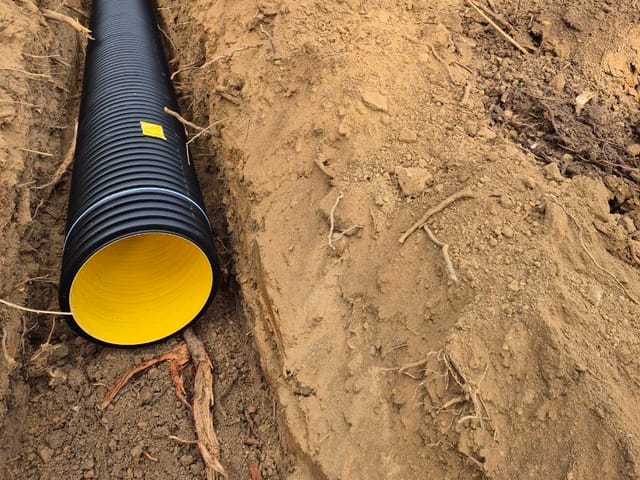
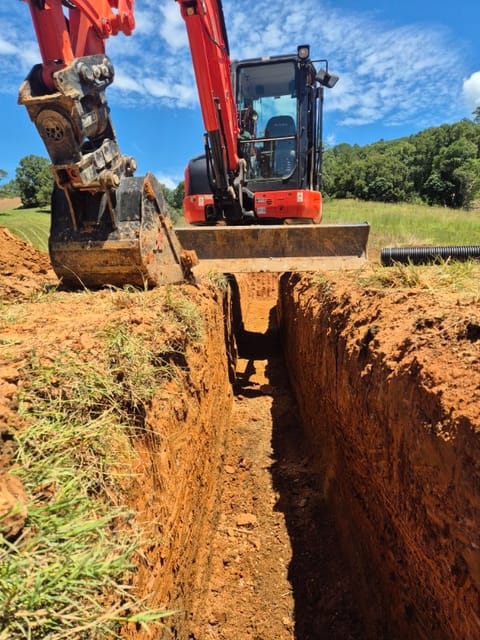
Trenches for water, sewer, stormwater and power conduit, dug to the depth and fall your trade sets. Luke digs and backfills. Your licensed plumber or electrician lays the pipe or conduit and makes the connections.
See moreTrees, stumps and scrub
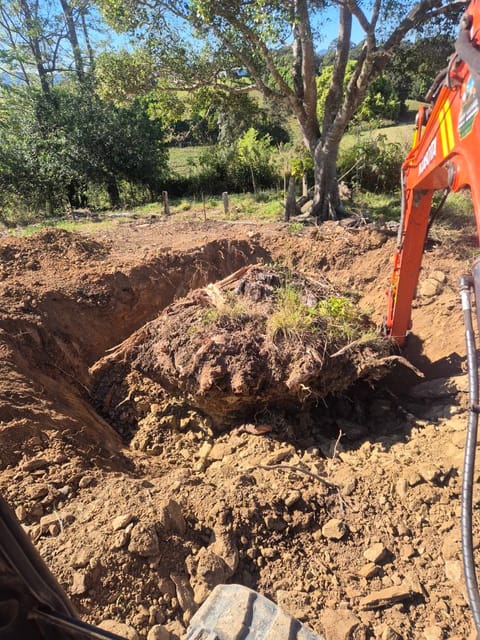
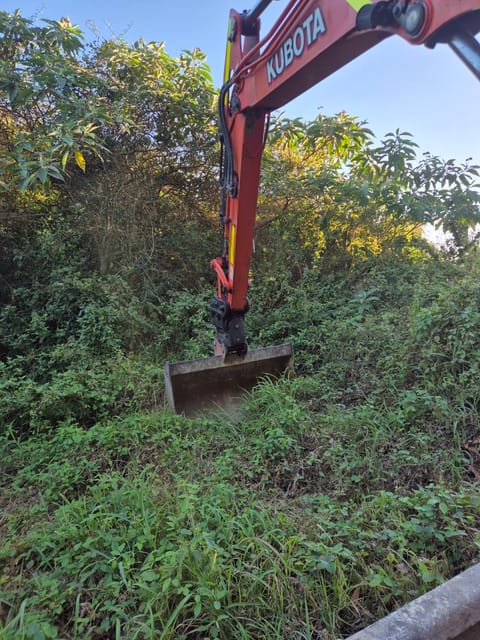
Trees and stumps removed at the owner's request once any City approval is in place, with the root ball dug out and the grab loading logs and branches. Scrub and regrowth on bigger hinterland blocks is the same job on a larger scale.
See moreSoil and rubbish removal
Spoil, old soil and rubbish loaded straight onto the Fuso by the excavator, about 7.5 t a load, and carted to a lawful tip or approved site, with dockets. On the Gold Coast, the fire ant zone rules decide where soil can go.
See moreThe ground across the Gold Coast
Along the beaches, the built-up coastal strip sits on a narrow barrier sandbar between the ocean and the waterways behind it. Much of the low land between that strip and the hills was once wetland drained by the Nerang River, and from the 1950s many of those swamps became canal estates. Most canals branch off the Nerang River, with more along Tallebudgera and Currumbin creeks and the Coomera River. The Queensland Government says coastal land below 5 m AHD, roughly 5 m above sea level, is likely to hold acid sulfate soils, which release acid and metals when dug up or drained.
Further back, the land drains through the Coomera and Nerang rivers, the Logan and Albert rivers on the northern edge, and Tallebudgera and Currumbin creeks in the south, all covered by the City's 2022 flood studies. The City says the Gold Coast, like many coastal cities, is susceptible to flooding. Its flood maps show whether a property could be affected, and a Flood level search gives a lot's Designated Flood Level, though not the flood extent or local flash flooding. On low ground, check flood levels, drainage and acid sulfate soils before a trench or any fill goes in.
To the west, the city climbs into the ranges known as the Gold Coast hinterland. The Tweed Regional Museum says the Tweed volcano erupted about 23 million years ago and built a lava shield that reached Tamborine. Its first flows formed the Beechmont basalts, and the Lamington and Springbrook plateaux now ring the north of its caldera, with the steep McPherson Range escarpments along the state border. NSW groundwater notes name the Neranleigh-Fernvale Group, metamorphosed greywacke and shale, as the basement rock of the Tweed and Gold Coast region. On steep or bushy blocks, check the City Plan landslide and bushfire hazard overlays.
City of Gold Coast rules to check before digging
| Check | What applies | Where to look |
|---|---|---|
| Trees and vegetation | City Plan protects vegetation over 4 m tall, trunks 40 cm or more around at 1.4 m above the ground, and vegetation on the Vegetation Management Overlay Map. Some clearing near boundary fences, approved buildings and pool fences is exempt. Otherwise, apply for operational works (vegetation clearing). | City of Gold Coast |
| Filling or excavation | In the Low and Medium density residential zones, an application is generally needed above 40 cubic metres of fill or excavation, or a ground level change of more than 1.0 m. Rural, rural residential and conservation zones have their own triggers. | City Plan Table 5.8.1 |
| Acid sulfate soils | On the overlay map, with natural ground at or below 20 m AHD: digging out 100 cubic metres or more, or filling 500 cubic metres or more averaging 0.5 m deep or more, at or below 5 m AHD needs code assessment. | City Plan Table 5.10.1 |
| Flood-prone land | In the Flood assessment required area, earthworks over 5 cubic metres that aren't part of building work or a material change of use need code assessment. | City flood maps and City Plan Table 5.10.11 |
| Driveway crossovers | City approval is needed to build a vehicular crossing, which sits on public land between the boundary and the road. Property owners are responsible for building and maintaining it. | City of Gold Coast online questionnaire |
| Buried services and power lines | Luke lodges his own Before You Dig enquiry for every dig and finds services by hand before the machine digs close. If a line is down or a machine contacts one, call 000 first, then Energex on 13 19 62. | Before You Dig Australia and Energex |
General information as at October 2026, from City Plan version 14 (effective 29 September 2026) and the official sources below. The City confirms what applies to your lot: search the address on the City Plan map or call 07 5582 8708.
Fire ants: soil, mulch and machines
As at October 2026, Queensland's fire ant zone map puts much of the Gold Coast, from Ormeau and Jacobs Well to Coolangatta and inland to Numinbah Valley, in fire ant biosecurity zone 2. Zones are reviewed monthly, and a whole property counts if any part of it touches a zone. Soil, fill, mulch and turf from inside the zones must be handled under the Biosecurity Regulation 2016. Machinery must be cleaned of soil before it leaves a site in the zones. Check the address on the fireants.org.au zone map.
How it works
From a photo to a finished job
Call or text Luke a photo
A wide shot, the gate or access, and the exact spot tells him most of what he needs.
Get a free quote
From your photos, or from a quick site look if the job needs it. No charge for either.
Book a day
Luke brings the right machine for the access and the job.
Dig, cart and clean up
Spoil goes out on his own tipper. The site is left tidy.
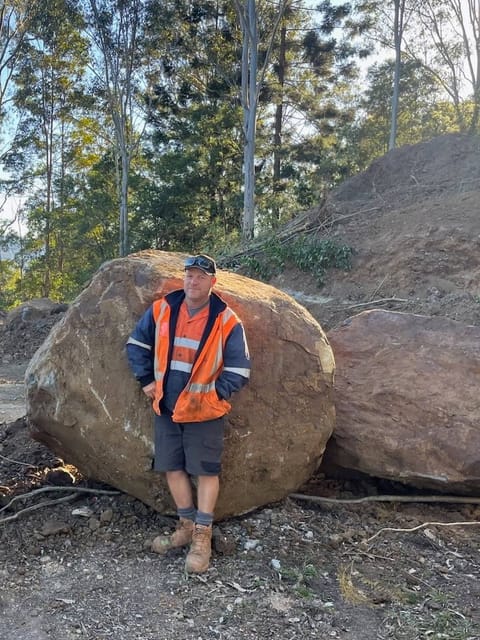
Luke and the machines at work
Got a dig on the Gold Coast?
Send Luke three photos: the whole area, the way in with a tape measure across it, and the spot to dig. Include the suburb and whether soil has to leave the site. He can quote from photos or drive up for a look.
Gold Coast questions
What earthmoving work can Luke do on the Gold Coast?
Excavation and earthmoving. That means trenches dug and backfilled for your plumber or electrician, trees and stumps removed at your request, soil and rubbish loaded and carted away, and excavator or posi-track hire with Luke operating. If your project includes other work, mention it when you call and Luke will say which parts he can take on.
Do I need City approval before I dig or fill?
Sometimes. In the Low and Medium density residential zones, City Plan generally needs an operational works application once filling or excavation passes 40 cubic metres or shifts the ground level by more than 1.0 m. In the Flood assessment required area, earthworks over 5 cubic metres need assessment, and acid sulfate soil and tree rules can apply too. Search your address on the City Plan map or call the City on 07 5582 8708, then send Luke the answer with your photos.
Where does the spoil from a Gold Coast job end up?
Some of it can usually go back into the trench as backfill. The rest leaves on Luke's Fuso, about 7.5 t a load, for a lawful tip or approved site, with dockets. On the Gold Coast, the fire ant rules shape the run: soil from a zone 2 site can go directly to a waste facility in zone 2, and moving it outside the zones needs a biosecurity instrument permit. Say if there's rubble, roots or rubbish mixed in, as that affects which sites will take it.
Can you get the machines into a canal-front yard or onto a hillside block?
Often, but access decides it, so measure first. Run a tape across the gate or side path at its narrowest point and text Luke a photo with the tape showing, plus a wide shot and the exact spot. On a canal-front lot, show where the water, walls and services are. On a hillside block, show the slope and where the tipper could park on level, firm ground. Luke will say whether the Kubota or the posi-track suits, or if the job needs another approach.
Sources (as at October 2026)
- City of Gold Coast City Plan, version 14 (effective 29 September 2026): 5.8 Operational work, Table 5.8.1 Change to ground level
- City Plan: Table 5.10.1 Acid sulfate soils overlay
- City Plan: Table 5.10.11 Flood overlay
- City Plan: SC1.2 Administrative definitions (assessable vegetation, Australian height datum)
- City of Gold Coast: City Plan map (zones and overlays by address)
- City of Gold Coast: Tree & vegetation removal on private land
- City of Gold Coast: Change to ground level
- City of Gold Coast: Driveways & vehicular crossings
- City of Gold Coast: Buying or building in a flood risk area
- City of Gold Coast: Flood maps
- City of Gold Coast: Flood level search
- City of Gold Coast: Flood technical reports (2022 flood catchment planning studies)
- Queensland Government: Acid sulfate soils explained
- National Fire Ant Eradication Program: Fire ant biosecurity zones
- Queensland Government: Fire ant biosecurity zone map, October 2026
- National Fire Ant Eradication Program: Soil management for fire ants
- National Fire Ant Eradication Program: Checking equipment and machinery for fire ants
- Wikipedia: Gold Coast, Queensland (geography)
- Tweed Regional Museum: Geological history
- NSW Department of Land and Water Conservation: Tweed-Brunswick groundwater vulnerability map notes, 1999 (PDF)
- Before You Dig Australia
- Energex: contact page, emergencies such as fallen powerlines
Suburbs
Gold Coast suburbs Luke covers
Each one has its own page with the ground, the access and the local rules to check.