
Tweed Heads, Banora Point, Terranora, Chinderah
Excavation and earthmoving in Tweed Heads
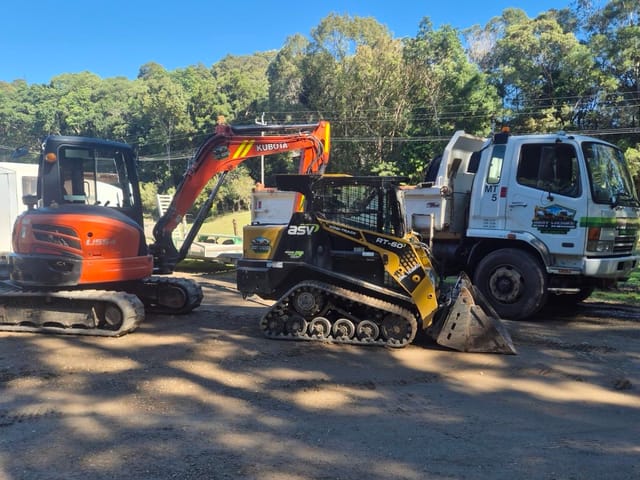
Luke brings a 5.5 t class Kubota excavator, an ASV posi-track and a Fuso tipper from Murwillumbah to dig trenches, pull stumps, cart soil and fix gravel driveways around Tweed Heads.
Or send the job details online
- Google 5.0 out of 5 from 2 reviews
- Liability and equipment insurance held
- ABN 58 346 068 875
- Owner-operator: Luke quotes the job and runs the machines
- Liability and equipment insurance held
- Spoil out to lawful tips, with dockets
- Before You Dig plans checked, services potholed by hand
- Owner-operatorLuke, over 10 years operating machinery
- Based in MurwillumbahWorking the Gold Coast to Lennox Head
- Insurance heldLiability and equipment, certificate on request
- Google 5.0 out of 5From 2 reviews, October 2026
- ABN 58 346 068 875Registered business name DIRT WERKS
Earthmoving around Tweed Heads, run by the operator
Dirt Werks is Luke, an owner-operator based in Murwillumbah. In the Tweed Heads area he covers the town itself, Tweed Heads South, Banora Point, Terranora, Bilambil and Chinderah. He quotes each job and runs the machines himself: a 5.5 t class Kubota U55-4 excavator, an ASV RT-60 posi-track and a Fuso Fighter tipper that carries about 7.5 t a load. If you want an excavator or digger with an operator in Tweed Heads, the person you explain the job to is the person in the seat.
The ground changes a lot in a short drive. Chinderah and Tweed Heads South are low, flood-prone land beside the Tweed River, and NSW groundwater notes describe the floodplain soils as estuarine sediments and alluvium. Sand dunes run along the coast from Point Danger to Cudgen Headland. Behind the flats, the land climbs to the ridges of Terranora and Bilambil Heights. On low ground the questions are water, acid sulfate soils and flood levels. On the hills they are slope, access and stability.
Jobs Luke takes on around Tweed Heads
Suburban backyards and the bigger lots in the hills.
Trenching for plumbers and electricians
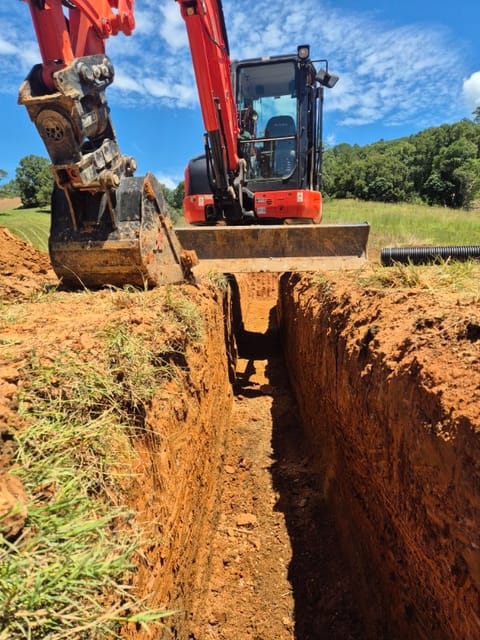
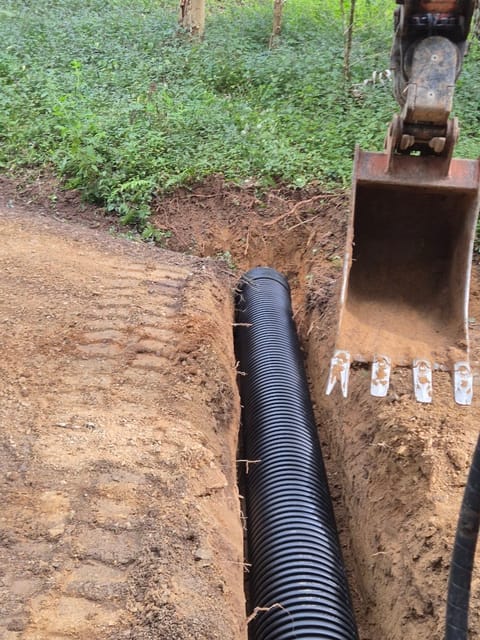
Trenches for water, sewer and stormwater lines, power conduit and ag drains, dug to the depth and fall your trade sets and checked with a laser level. Luke digs and backfills. Your licensed plumber or electrician lays and connects.
See moreStumps, trees and clearing
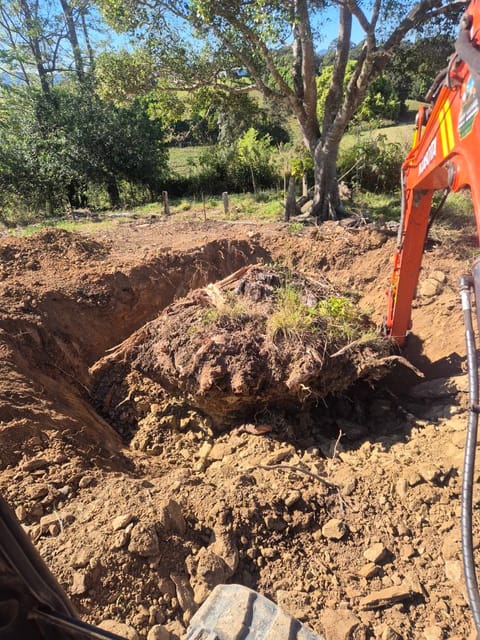
Old stumps dug out, root ball and all, and trees removed at the owner's request once any council permit is sorted. The grab picks up logs and branches. On larger rural blocks, Luke also clears ground and cuts access tracks.
See moreSoil and rubbish removal
Old soil, trench spoil or a pile of rubbish loaded straight onto the Fuso by the excavator and carted to a lawful tip or approved site, with dockets.
See moreGravel, road base and soil in
Picked up from the quarry on Luke's Fuso tipper, tipped through the tailgate on level, firm ground and spread with the posi-track.
See moreGravel driveway repairs
Potholed or washed-out gravel drives prepped, re-sheeted, levelled with the posi-track, watered and rolled. If the drive is to be sealed, others do the sealing on the base Luke prepares.
See moreAuger holes
Auger holes for fence posts and other post holes, drilled clean rather than dug out with a bucket.
See moreLow ground: acid sulfate soils, water and fill
Tweed Shire Council says acid sulfate soils are common along the Tweed Coast. NSW groundwater notes explain where they come from: marine and estuarine sediments rich in pyrite. When drainage lets air in, the pyrite oxidises to sulfuric acid and the soil pH can fall below 4. Council says written approval is needed in most cases before these soils are disturbed. Its management plan for minor works can't be used where groundwater is likely to be disturbed or dewatering is likely. Those jobs need a site-specific plan.
Water can sit close to the surface. The same groundwater notes rate land with a water table less than 5 m down, shallow soil, low slope and permeable ground as highly vulnerable, and say it is found particularly along the unconsolidated sands of the coastal foreshores. A trench, tank hole or drain on low land may meet water before it reaches the depth on the plan, so tell Luke if you've seen water sitting in post holes, garden beds or nearby digs.
If the plan is to raise a low yard with fill, check first: Council says filling land needs development consent in most cases. In Chinderah Village, north-west of the Pacific Highway, Council's flood plan allows only minor filling for drainage. Flood planning levels were revised on 4 March 2026 in line with the Tweed Valley Flood Study Update and Expansion 2024, and they change as flood studies are updated. Get a Section 10.7 certificate and a Property Flood Report for your lot before any fill is ordered.
Flooding: why drainage comes first on the flats
Council's flood plan says flooding in the Tweed Heads area can come from local rain, high tides, the Broadwater creeks, the Tweed River and ocean surge, in any combination. It names the 1954 flood as the highest recorded here, at 2.51 m AHD near the river mouth. NSW SES says Tweed Heads South and Banora Point can flood from local runoff or from backwater out of Terranora Broadwater or the Tweed River. It says Seagulls Estate at Tweed Heads West is particularly vulnerable, with up to 1.5 m of floodwater in major events, and that 'flooding is a certainty' in Chinderah.
For earthworks, that puts drainage first. Before a new ag drain or stormwater line goes in, settle with your plumber where it will discharge. Luke digs and backfills the trench, and your licensed plumber lays the pipe and connects it. To count as exempt development under the NSW standards, earthworks and retaining walls must not redirect surface or ground water or carry sediment onto a neighbour's land, and must be at least 40 m from natural water. On a canal or riverfront lot, check with Council before assuming a small cut or fill is exempt.
Steep blocks: Terranora and Bilambil Heights
Council's flood plan names Terranora and Bilambil Heights as natural high ridges that stay above even the largest flood that could conceivably occur, though floodwater can surround them. The slope brings its own problems. NSW SES says steep urban development towards Terranora makes Tweed Heads South and Banora Point susceptible to local flash flooding. The 2022 flood caused two major slips on Scenic Drive at Bilambil Heights, and Council's repair bored concrete piles as far as 5 m down to anchor on bedrock and placed more than 900 tonnes of rock in boulder retaining walls.
Tweed DCP 2025 (section D1) says earthworks more than 0.6 m above or below existing ground need a retaining wall or other support, anything over 1 m needs a structural engineer's design, and batters can be no steeper than 1:2 unless a geotechnical report satisfies Council. No cut or fill is allowed in easements. Those levels are for your builder, engineer or certifier to settle. For trenching, stump removal, a gravel drive or soil removal on a slope, send Luke photos of the slope, the driveway and where the machine and the tipper could stand.
Fire ants and moving soil near the border
On 2 July 2025 the NSW Government reported an immature fire ant nest treated and destroyed at a Tweed Heads site. Under the Biosecurity (Fire Ant) Emergency Order (No. 10) 2026, published 1 September 2026, the NSW fire ant infested area includes NSW land within 5 km of detections in Queensland and at Tweed Heads South. The Order sets rules for moving fire ant carriers out of these areas, including soil, mulch, earth-moving equipment and heavy vehicles such as tippers, so check the current NSW DPIRD zone map before soil or fill comes in or goes out.
Other approvals to check before digging
| Check | What applies | Who to ask |
|---|---|---|
| Trees | In non-rural areas, approval to clear declared vegetation, including native plants at least 4 m tall or 10 cm in diameter, any tree 40 cm or more in diameter, preferred koala food trees and threatened species. Lodging is free. | Tweed Shire Council |
| Driveway crossings | Section 138 Roads Act consent for work in the road reserve on local roads, including driveways and kerb and gutter changes. | Tweed Shire Council |
| Council water and sewer | Section 68 approval for any work on Council's water supply or wastewater infrastructure. | Tweed Shire Council |
| Buried services and power lines | Before You Dig plans are free. SafeWork NSW sets a 3 m approach distance for mobile plant near lines up to 132,000 volts. | Before You Dig Australia; Essential Energy (13 23 91, as listed by Tweed Shire Council) |
General information as at October 2026, from the official sources below. Council or your certifier confirms what applies to your lot. See also the guide to council approval for excavation.
How it works
From a photo to a finished job
Call or text Luke a photo
A wide shot, the gate or access, and the exact spot tells him most of what he needs.
Get a free quote
From your photos, or from a quick site look if the job needs it. No charge for either.
Book a day
Luke brings the right machine for the access and the job.
Dig, cart and clean up
Spoil goes out on his own tipper. The site is left tidy.
Luke's machines on the job
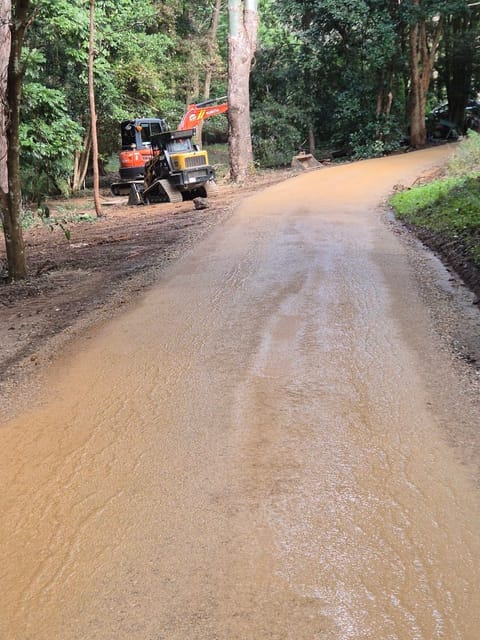
Got a job around Tweed Heads?
Text Luke a wide photo, the gate or side access with a tape across it, and the exact spot. Add the suburb and whether spoil needs to go. Luke quotes from your photos, or from a quick site look if the job needs it.
Tweed Heads questions
Do you work in Coolangatta or on the Gold Coast?
Yes. Luke works right across the Gold Coast, from Coolangatta, Tugun and Currumbin up to Robina, Nerang, Southport and Ormeau, as well as Tweed Heads, Tweed Heads South, Banora Point, Terranora and the rest of the Tweed. The Gold Coast page lists every suburb and the City of Gold Coast rules to check before you dig.
Can you get a machine into my backyard?
It depends on the way in, so measure before you guess. Run a tape across the gate and the narrowest point between the street and the job, and text Luke a photo with the tape in it. Mention eaves, carports, steps, branches and how steep the path is. The Kubota is a 5.5 t class excavator and the ASV RT-60 is a compact track loader, and Luke will tell you which fits, or whether the job needs a different plan.
Do I need approval to dig on low land near the river or Broadwater?
Often, yes. Before a trench, drain or tank hole goes in on low ground, ask Council two things: is the lot mapped for acid sulfate soils, and could the work hit groundwater or need pumping out? Either can mean written approval and a site-specific management plan before digging starts. Raising the yard with imported fill needs development consent in most cases. Send Council's answer to Luke with your photos, so he knows what applies before he quotes.
Can you take out a tree as well as the stump?
Yes, Luke removes trees and stumps at the owner's request, but check the permit first. In non-rural areas Tweed Shire Council requires approval to clear declared vegetation, which includes any tree 40 cm or more in diameter, native plants at least 4 m tall and preferred koala food trees. Lodging is free. Under DCP 2025 some vegetation within 5 m of an existing lawful house is exempt, but not large trees, koala food trees, hollow-bearing trees or threatened species.
Can you work on a steep block in Terranora or Bilambil Heights?
Tell Luke about the slope before booking. Send a wide photo from the bottom and the top, the driveway, and where a truck could stand: the tipper is only tipped on level, firm ground, after checking for overhead lines. Luke will tell you whether the excavator or posi-track can work it safely. Where earthworks change ground levels by more than 0.6 m, DCP 2025 calls for a retaining wall or other support, which your builder and engineer design first.
Where does the soil from my job go?
On trench jobs, much of the spoil goes back in as backfill. The rest goes out on Luke's Fuso tipper, about 7.5 t a load, to a lawful tip or approved site, with dockets. Tell Luke if the soil is mixed with rubble, roots or rubbish, because that changes where it can go. Parts of the Tweed Heads area fall inside the NSW fire ant infested area, so check the current NSW DPIRD zone map before soil leaves the site.
Sources
- Tweed Shire Council: acid sulfate soils
- Tweed Shire Council: land constraints
- Tweed Shire Council: disposal of fill
- Tweed DCP Section A3: Development of Flood Liable Land, version 1.7 (PDF)
- Tweed Development Control Plan 2025 (PDF)
- NSW SES: Tweed local flood information
- NSW SES: Chinderah flood guide (PDF)
- NSW SES: Tweed Heads South and Banora Point FloodSafe guide (PDF)
- Tweed Shire Council: Scenic Drive landslip repair (February 2023)
- NSW Department of Land and Water Conservation: Tweed-Brunswick groundwater vulnerability map notes, 1997 (PDF)
- NSW Planning Portal: exempt earthworks, retaining walls and structural supports
- Tweed Shire Council: trees on private land
- Tweed Shire Council: driveway access to property guide (PDF)
- Tweed Shire Council: works on Council water and wastewater infrastructure
- Tweed Shire Council: electricity network (Essential Energy contact)
- NSW Government: fire ants confirmed and treated at a Tweed Heads site (2 July 2025)
- NSW DPIRD: Plain English Guide to Biosecurity (Fire Ant) Emergency Order (No. 10) 2026 (PDF)
- NSW DPIRD: fire ant maps of infestations and zones
- Tweed Shire Council: fire ants
- Before You Dig Australia
- SafeWork NSW: mobile plant operating near overhead power lines
Suburbs
Towns and suburbs around Tweed Heads
Each one has its own page with the ground, the access and the local rules to check.
Related
Kingscliff and Tweed Coast
Trenching, driveway repairs, clearing and soil removal in Kingscliff, Salt, Casuarina and Cudgen from a Tweed-based operator.
See more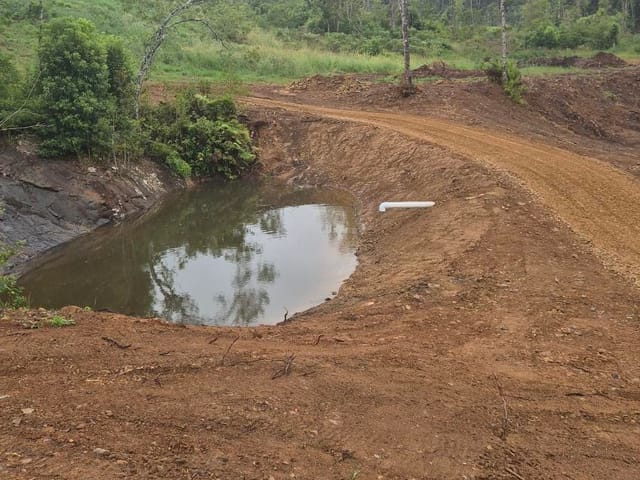
Murwillumbah
Excavator hire and earthworks from Murwillumbah: farm dams, creek crossings, rural driveways, clearing and trenching.
See more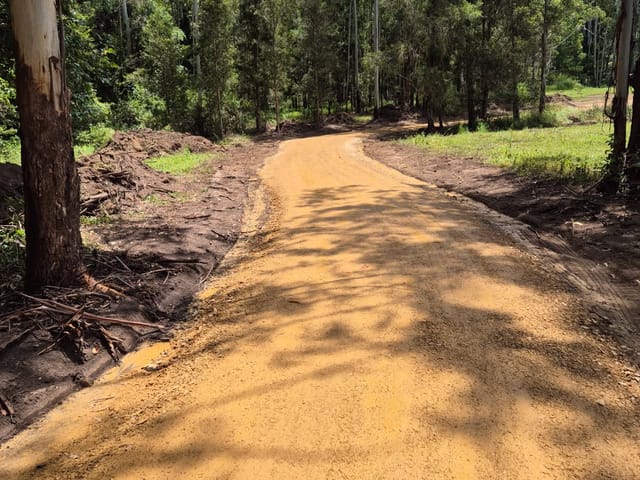
Projects
Photos from Dirt Werks jobs: gravel driveways and tracks, drainage trenches, farm dams, creek crossings, clearing and stumps.
See more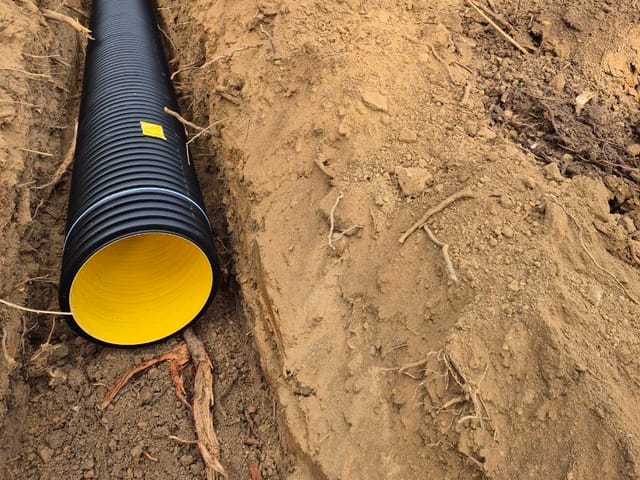
Trenching and drainage
Trenching for plumbing, power and drainage, Gold Coast to Lennox Head. Before You Dig checked, dug to grade, backfilled.
See more