
Rural earthworks, based in Murwillumbah
Land clearing, dams, creek crossings and rural earthworks
Luke clears scrub, takes out trees and stumps, digs farm dams and builds creek crossings and access tracks on rural land, running his own excavator, posi-track and tipper.
Or send the job details online
- Google 5.0 out of 5 from 2 reviews
- Liability and equipment insurance held
- ABN 58 346 068 875
- 5.5 t Kubota excavator with grab and buckets
- Fuso Fighter tipper, about 7.5 t payload
- Owner-operator: Luke quotes and runs the machines
- Spoil to lawful tips or approved sites, with dockets
- Owner-operatorLuke, over 10 years operating machinery
- Based in MurwillumbahWorking the Gold Coast to Lennox Head
- Insurance heldLiability and equipment, certificate on request
- Google 5.0 out of 5From 2 reviews, October 2026
- ABN 58 346 068 875Registered business name DIRT WERKS
Rural earthworks with the owner on the controls
Dirt Werks is Luke, an owner-operator based in Murwillumbah, doing land clearing and earthworks on farms, acreage and bush blocks. Luke quotes the job and runs the machines himself, so the person who looks over your block is the person who does the work. Luke has over 10 years operating machinery.
Luke brings his own excavator, posi-track and tipper: the Kubota clears and digs, the ASV shapes tracks, and the Fuso carts spoil out and brings road base or gravel in from the quarry. He works from Murwillumbah and the Tweed Valley across to the Tweed Coast and Pottsville, and south through the Northern Rivers to Byron Bay and Lennox Head.
Land clearing and rural earthworks Luke takes on
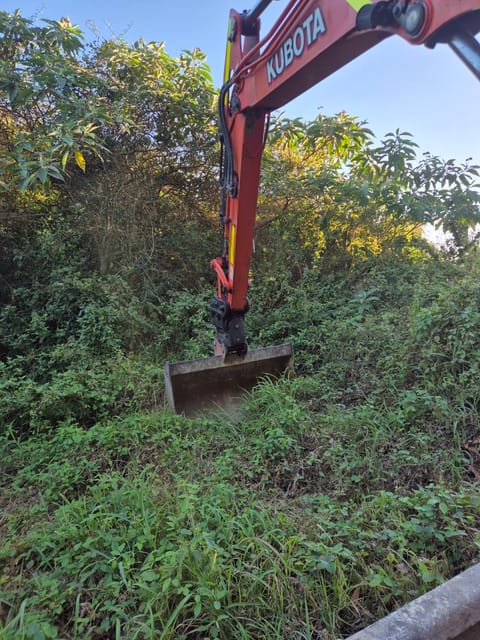
- Scrub and fence-line clearing on paddocks, bush blocks, tracks and fence lines.
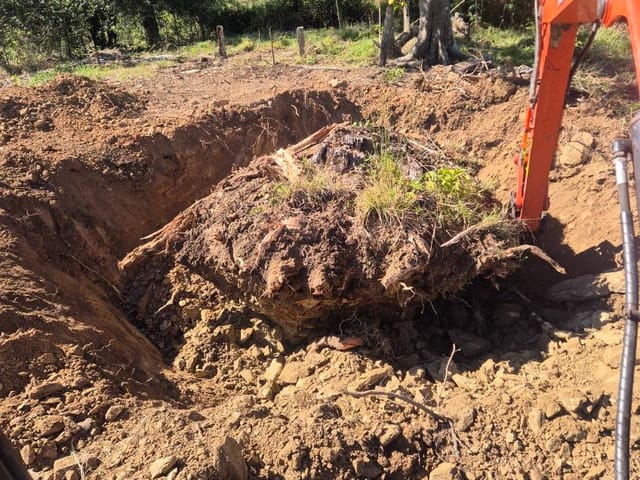
- Tree and stump removal at your request, root ball and all.
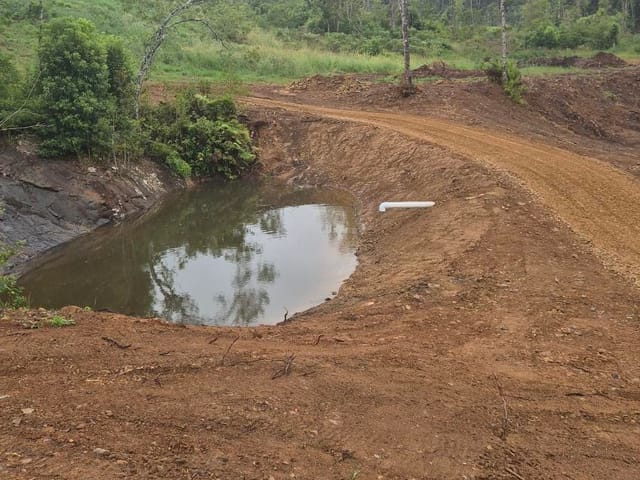
- Farm dams dug or cleaned out with the Kubota, with tracks cut to reach them.
- Creek crossings: approach ramps cut in, the bed dug out, the culvert pipe laid, gravel spread on the approaches.
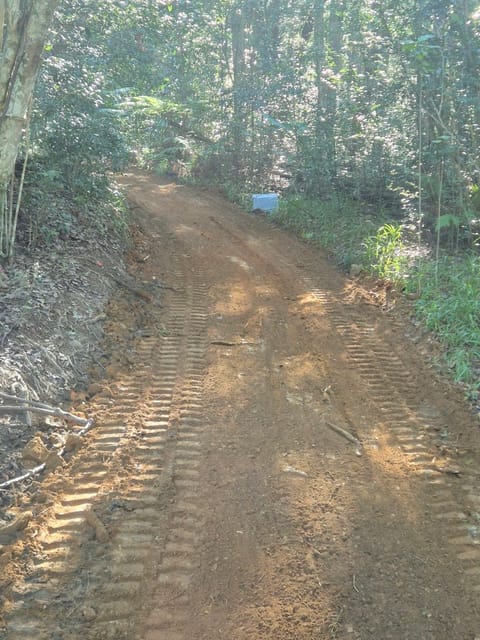
- Access tracks cut and graded through the bush, with road base brought in on the tipper.
- Rural driveways regraded and re-sheeted: see gravel driveway repairs.
- Culverts and farm ag drains laid and backfilled on rural jobs. For house plumbing and power, Luke digs and backfills and your licensed plumber or electrician lays and connects: see trenching.
- Spoil and rubbish carted away on the Fuso: see soil removal and tipper hire.
How a clearing job runs
Mark what stays
Flag the trees you're keeping, and show Luke the boundaries, the gate and the way in for the machines.
Check above and below
Luke checks Before You Dig plans, digs by hand to find services before the machine gets close, and keeps the machines at least 3 m from overhead power lines.
Silt fences where needed
Where runoff could reach a drain or creek, Luke puts silt fences in to hold the sediment back.
Clear with the Kubota
The 5.5 t Kubota U55-4 lifts logs and scrub with the grab and digs stumps out with the bucket.
Cart out, then shape
Spoil leaving the property goes out on the Fuso tipper, with dockets. The ASV RT-60 posi-track then levels the ground and grades the tracks.
Farm dams and creek crossings
Dams and crossings are where the water rules come in. A creek crossing sits on waterfront land, and a farm dam built without a water licence has to fit within harvestable rights. Both are covered in the questions below. Have any approval in place before the machines arrive.
To quote a dam, Luke needs photos of the spot, the gate and the way in for the machines, and roughly how big you want it. For a crossing, send photos from both banks and say what has to get across, such as a ute or a tractor. More rural jobs are on the projects page.
Approval comes before the first tree
If the clearing needs an approval, it has to be issued before any tree comes down. Your council can tell you what applies to your block and whether an exemption covers it, and on rural-zoned land so can Local Land Services. For digging and fill rules, see council approval to excavate.
Tree and vegetation rules at a glance
| Where | What the rules say | Check with |
|---|---|---|
| Tweed Shire, non-rural zones | Council approval to clear declared vegetation: native plants 4 m or taller or 10 cm or more in diameter, mapped native bushland, any tree 40 cm or more in diameter, preferred koala food trees, threatened species and trees on the Significant Tree Register. Free to lodge. | Tweed Shire Council |
| Tweed Shire, within 5 m of a house | Vegetation within 5 m of an existing lawful house (including an attached deck, patio, carport or garage) on the same land can be cleared without a permit (DCP 2025, Section B2). Exclusions include large trees (40 cm or more), preferred koala food trees, hollow-bearing trees, threatened species and Significant Tree Register trees. | Tweed Shire Council |
| Rural zones RU1 and RU2 | Clearing native vegetation may need approval under the Local Land Services Act 2013. | Local Land Services |
| Rural-zoned land in the coastal zone | For genuine farm use, clearing native vegetation for fences, roads and tracks, pipelines, stockyards, tanks, dams and machinery sheds is an allowable activity, with no Local Land Services Act approval needed. Clear only the minimum: 15 m at most, 12 m on holdings under 10 ha, and 6 m on vulnerable or sensitive regulated land. Council or other approvals may still apply. | Local Land Services |
| Creek and river banks | Removing vegetation, rock or gravel, or depositing fill, on the bed or within 40 m of the bank is a controlled activity under the Water Management Act 2000. Not every activity needs approval. | NSW Water |
| Byron Shire | Tree Removal Permit to prune or remove trees on private land. Dead or dangerous trees: a separate exemption application. Trees of heritage value: development application. | Byron Shire Council |
| Ballina Shire, outside RU1 and RU2 zones | Private Tree Permit, lodged through the NSW Planning Portal. No pruning or removal until Council issues it. | Ballina Shire Council |
General information as at October 2026, from the official pages listed under sources. Rules change, so confirm with the council or agency listed before any tree comes down.
Fire ants, fill and runoff
- Fire ants. Murwillumbah has a fire ant movement control area covering 5 km around the South Murwillumbah nests found in November 2023, and Wardell in Ballina Shire has one too. Both were still in place under Emergency Order (No. 10) 2026, published 1 September 2026. Soil, mulch, compost, manure, hay, turf, quarry materials and earth-moving equipment can only leave a movement control area under the Order's conditions, such as being cleaned free of soil. NSW land within 5 km of detections in Queensland and at Tweed Heads South is in the separate fire ant infested area. Check the current DPIRD map first, and report suspected fire ants to the NSW Biosecurity Helpline on 1800 680 244.
- Spreading spoil on the property. Tweed Shire Council says that in most cases filling land needs development consent, so check with Council before dam or clearing spoil is spread somewhere new on the block.
- Sediment in waterways. Ballina Shire Council warns that letting soil or sediment into waterways is an offence, with penalties that can exceed $8,000. Its advice is to check erosion controls every day and before and after rain.
Clearing, tracks, crossings and pipe
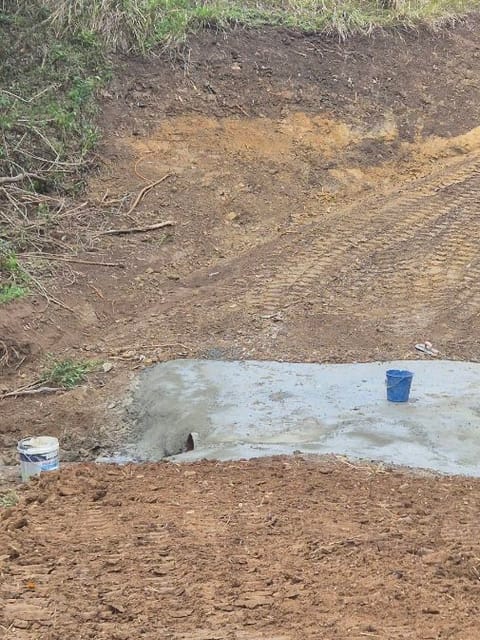
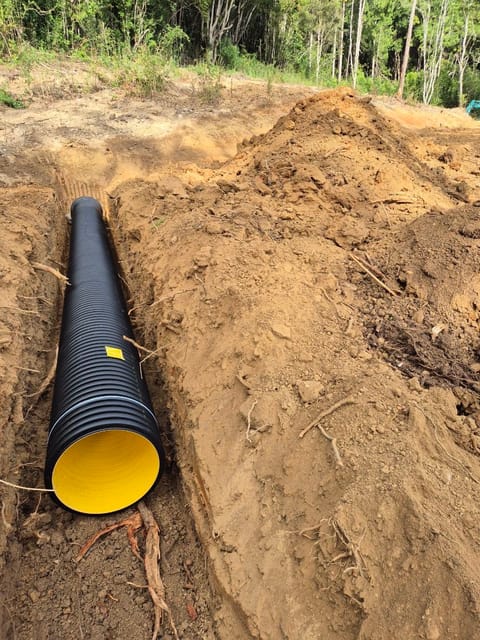
Scrub, stumps, a dam or a crossing to sort?
Text Luke photos of the block, the gate and the trees you want kept, and say what needs to go.
Land clearing questions
Do you dig the stumps out, or just push the trees over?
Trees and stumps come out at your request. Luke digs stumps out with the Kubota's bucket so the root ball comes too, and moves logs and scrub with the grab. Anything leaving the property goes out on his Fuso tipper. If the block is inside a fire ant zone, check the current DPIRD rules before stumps or soil leave the property. Say what you want done with the timber when you send photos, so the quote covers it.
Do I need a permit to clear trees on my land?
Often, and it depends on your zone and council. In Tweed Shire's non-rural zones, declared vegetation needs Council approval, which is free to lodge. On rural RU1 and RU2 land, clearing native vegetation may need approval under the Local Land Services Act 2013. Byron Shire uses a Tree Removal Permit, and Ballina a Private Tree Permit through the NSW Planning Portal. The table above sets out each council's rules and who to check with.
Do I need approval to build or repair a creek crossing?
Check first. In NSW, waterfront land is the bed of a river, lake or estuary and the land on each side within 40 m of the bank. Works such as roads and pipes, removing vegetation, rock or gravel, and depositing gravel or fill there are controlled activities. Not every activity needs approval, but applications go through the NSW Planning Portal and most also need council approval. Luke builds to whatever is approved.
Can I put in a farm dam without a water approval?
Often, under harvestable rights. In NSW coastal-draining catchments you can capture up to 10% of the average annual regional rainfall runoff from your land in harvestable-rights dams, with no water access licence. They can go on non-permanent first and second order streams, hillsides and gullies, but not on a third-order or higher stream or within 40 m of one, or within 3 km upstream of a Ramsar wetland. If your spot doesn't fit, check the NSW water rules before digging.
How is a clearing or dam job priced?
Luke quotes each job from your photos, or from a site look if it needs one. The price moves with how thick the scrub is, how many stumps there are and how big, how much spoil and timber has to be carted away and how far, and the access and slope for the machines. Photos of the area, the gate and the trees you're keeping are the best start.
Service areas
Based in Murwillumbah, working the Gold Coast to Lennox Head
Gold Coast
Coolangatta, Currumbin, Palm Beach, Burleigh Heads, Robina, Mudgeeraba, Nerang, Southport, Helensvale, Coomera, Ormeau
Murwillumbah & Tweed Valley
Murwillumbah, South Murwillumbah, Bray Park, Uki, Tyalgum, Chillingham, Stokers Siding, Burringbar
Tweed Heads
Tweed Heads, Tweed Heads South, Banora Point, Terranora, Bilambil, Chinderah
Kingscliff & Tweed Coast
Kingscliff, Cudgen, Casuarina, Salt, Kings Forest
Pottsville & Cabarita
Pottsville, Cabarita Beach, Bogangar, Hastings Point, Mooball
Byron Bay & Brunswick Heads
Byron Bay, Brunswick Heads, Ocean Shores, Mullumbimby, Suffolk Park, Bangalow
Lennox Head & Ballina
Lennox Head, Skennars Head, Ballina
Not on the list? Call Luke on 0488 987 325 and ask.
Sources (as at October 2026)
- Tweed Shire Council: trees on private land
- Tweed Development Control Plan 2025 (Section B2), effective 1 June 2026
- Byron Shire Council: trees
- Ballina Shire Council: Private Tree Permit guide
- NSW Government: allowable activities on rural land
- NSW Water: controlled activity approvals on waterfront land
- NSW Water: harvestable rights in coastal-draining catchments
- NSW Water: where harvestable rights dams can go
- NSW DPIRD: fire ant infested areas and movement control areas map
- NSW DPIRD: Plain English Guide to Biosecurity (Fire Ant) Emergency Order (No. 10) 2026
- Tweed Shire Council: fire ants
- Tweed Shire Council: fire ant update, November 2023
- NSW Government: fire ants confirmed and treated at a Tweed Heads site, July 2025
- Tweed Shire Council: disposal of fill
- Ballina Shire Council: erosion and sediment control
- Before You Dig Australia
Related
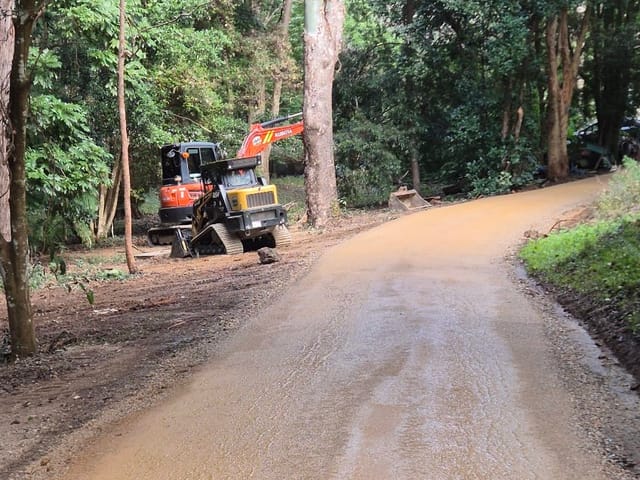
Driveway repairs
Potholes, washouts and worn gravel fixed: regrading, re-sheets and base prep for sealing. Tweed Valley and coast.
See more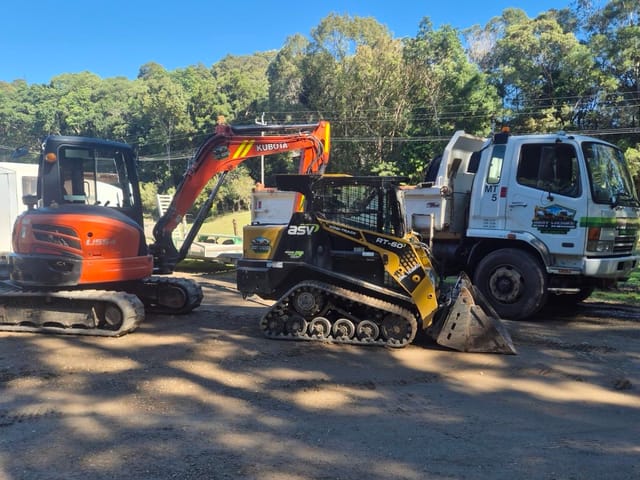
Soil removal and tipper
Soil, spoil and rubbish removal to lawful tips, tipper hire with driver, and gravel, road base and soil delivered. Tweed to Ballina.
See more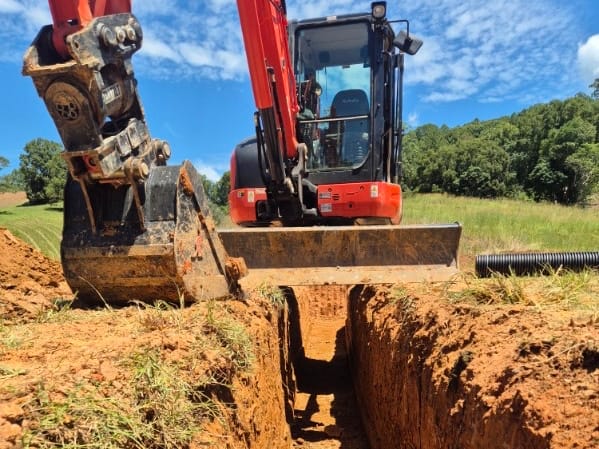
Excavator hire
Hire a 5.5 t Kubota excavator, ASV posi-track and Fuso tipper with Luke operating. Gold Coast to Lennox Head.
See more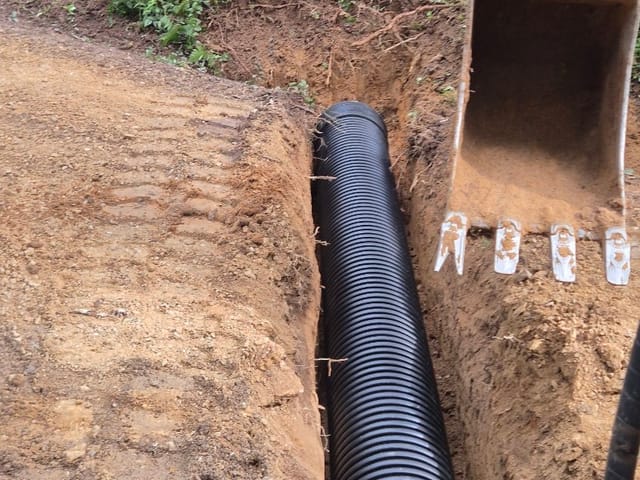
Council approval to excavate
When digging, filling or a retaining wall needs council approval in the Tweed, Byron and Ballina shires, with official sources.
See more