
Service trenches, Gold Coast to Lennox Head
Trenching for plumbing, electrical and drainage
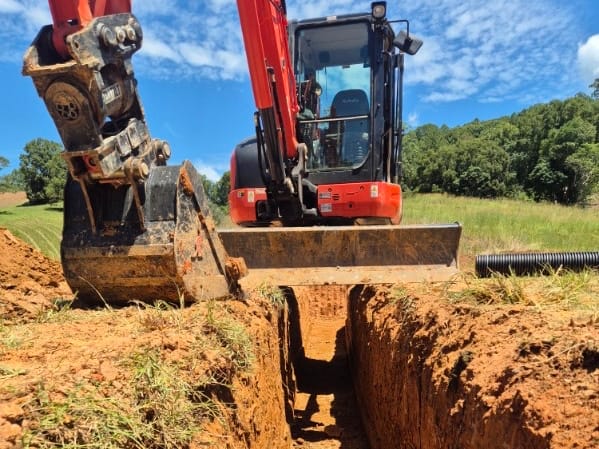
Luke digs trenches for water, sewer and stormwater lines, power conduit and ag drains with his 5.5 t Kubota excavator, then backfills and compacts once your licensed plumber or electrician has laid and connected the pipe or cable.
Or send the job details online
- Google 5.0 out of 5 from 2 reviews
- Liability and equipment insurance held
- ABN 58 346 068 875
- Luke digs and backfills, your trade lays and connects
- Before You Dig plans checked, services potholed by hand
- Trench grade set with a laser level
- Backfill compacted with a compaction wheel
- Owner-operatorLuke, over 10 years operating machinery
- Based in MurwillumbahWorking the Gold Coast to Lennox Head
- Insurance heldLiability and equipment, certificate on request
- Google 5.0 out of 5From 2 reviews, October 2026
- ABN 58 346 068 875Registered business name DIRT WERKS
Trenching for plumbers, electricians, builders and farms
A service trench is dug for someone else's pipe or cable, so it has to be the right depth, in the right place, and open when the trade turns up. Luke digs it himself with his 5.5 t Kubota U55-4 excavator and sets the grade with a laser level, so drainage lines get their fall. Spoil sits beside the trench for backfill, and any left over goes onto his Fuso tipper.
The split is simple. Luke digs and backfills. Your licensed plumber or electrician lays and connects the pipe or cable. When they're finished, Luke puts the spoil back and compacts it with a compaction wheel, which helps stop the trench line sinking later.
Trenches Luke digs
Plumbing trenches
Water services, sewer lines and stormwater lines, dug to the depth and fall your plumber specifies. The plumber lays and connects, then Luke backfills.
Power conduit trenches
Underground power out to a shed, pump or gate, dug to the depth your electrician needs. The electrician lays the conduit and cable and connects it.
Agricultural drains
Ag drains for boggy ground or along the high side of a driveway, with the fall checked by laser. Luke digs and backfills, and your licensed plumber lays and connects the pipe.
Culvert and drainage pipe on rural jobs
On farms and rural blocks, water is often the problem: a track that washes out, a paddock that stays boggy, a gully cutting across the driveway. Luke lays culvert and drainage pipe under tracks and driveways and across paddocks, including ag drains, then backfills and compacts over it.
It can be done on the same visit as regrading a gravel driveway or building an access track or creek crossing (land clearing and rural earthworks). Under NSW rules, laying pipes in a watercourse is a controlled activity, and waterfront land takes in the creek bed and land within 40 m of the bank, so the landowner should check whether approval is needed before work starts.
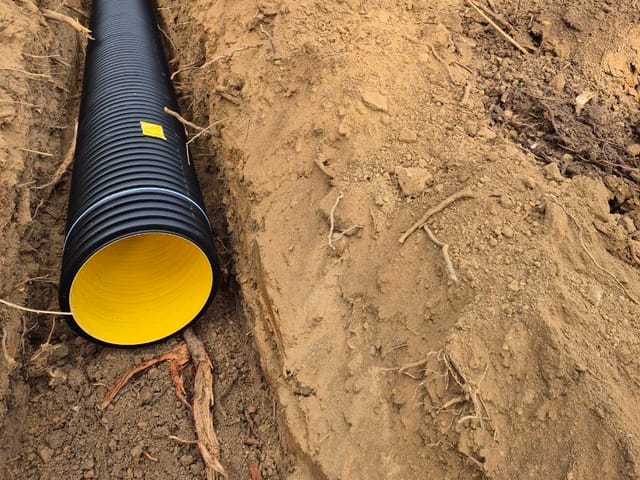
How a trench job runs
Send the run
Text Luke the plan, or a photo with the trench line drawn on it, plus the depth and fall your trade needs and the gate width.
Plans and potholing
Before You Dig plans are checked, and any service near the line is potholed by hand before the machine goes close.
Dig to grade
The Kubota digs and the laser checks the grade. Open trenches are barricaded, and nobody is in the trench while the machine digs.
Lay and connect
Your licensed plumber or electrician lays the pipe or conduit and makes the connections.
Backfill and clean up
Luke backfills, compacts with the compaction wheel and carts leftover spoil to a lawful tip or approved site on his tipper, with dockets.
For plumbers, electricians and builders
- Luke can dig ahead of your crew, so the trench is open and barricaded when you arrive.
- Luke quotes the job and runs the excavator himself, so the person you brief is the one on the machine.
- On builder jobs, the builder's offsider is often on site with Luke.
Deeper trenches and local ground
If the plans call for a trench deeper than 1.5 m, say so when you ask for a quote. SafeWork NSW treats that as high-risk construction work: a Safe Work Method Statement must be developed and followed, and the risk of collapse minimised by benching, battering or shoring, or by written advice from a geotechnical engineer that all sides are safe.
Luke is based in Murwillumbah and digs trenches across the Tweed Valley and out to Tweed Heads, Kingscliff and the Tweed Coast, Pottsville and Cabarita, Byron Bay and Brunswick Heads and Lennox Head and Ballina. NSW groundwater notes for the Tweed and Brunswick valleys describe basalt-derived soils, usually well drained, on the plateaus and steeper slopes, and sedimentary soils on the floodplain and coastal strip. Tweed Shire Council says acid sulfate soils are common along the Tweed Coast.
What to check before the trench goes in
| Check | Why it matters | Who to ask |
|---|---|---|
| Underground services | Before You Dig plans are free to request, but they expire, and they mainly show network services. The asset owner may require hand digging to find a service's exact position. | Before You Dig Australia |
| Council water and sewer mains | In Tweed, anyone working on Council's water supply or wastewater infrastructure must apply for Section 68 approval. Council asks anyone planning work in or near an easement to read its Works in Proximity policy first. | Tweed Shire Council, 02 6670 2400 |
| Acid sulfate soils | Exposed to air by digging or a lowered water table, they can produce sulfuric acid. Tweed requires written approval in most cases before they are disturbed, and a site-specific plan where groundwater may be disturbed or dewatering is likely. Byron says they occur on coastal floodplains, generally below RL 5 m AHD. Ballina asks anyone digging on or next to the floodplain (below 10 m AHD) to contact Council and check its risk maps. | Your council: Tweed, Byron or Ballina |
General information as at October 2026, from the official sources listed below. Your council, plumber, electrician or certifier confirms what applies to your block.
Need a trench dug?
Text Luke a photo with the trench line marked and the depth your plumber or electrician needs. He can quote from that, or from a quick site look if the job needs it.
Trenching questions
Do you lay the pipe or cable as well?
No. Luke digs the trench, and your licensed plumber or electrician lays and connects the pipe, conduit or cable. Once they're done, Luke backfills and compacts the trench. On rural jobs he lays culvert and drainage pipe himself, then backfills and compacts over it.
How deep and wide will the trench be?
Your plumber, electrician or the plans set the depth, width and fall, not the digger. Send those with the job details and Luke digs to that depth and fall, checking the grade with a laser level as he goes. Anything deeper than 1.5 m is high-risk construction work under SafeWork NSW rules, so flag it when you ask for a quote.
What if the trench hits rock?
Rock is hard to pick from the surface. If you've seen rock in a nearby cutting, a neighbour's trench or a post hole, mention it and send photos so the quote can allow for it. It's better known before the day than found halfway along the run.
Can you dig near my house, septic or water tank?
Yes, with care. Private lines on your block, like tank, septic and shed power lines, usually won't show on Before You Dig plans. Mark what you know on a photo before the day. Any service near the trench line is found by hand before the machine goes close.
Do I need council approval to dig a trench?
It depends on where and what. Work on Tweed Council's water or sewer infrastructure needs Section 68 approval, acid sulfate soils on low-lying coastal land can need council approval before they're disturbed, and pipe laid in a creek can need a controlled activity approval. Your council or plumber confirms what applies. See council approval to excavate.
Official sources
- Before You Dig Australia: requesting underground plans
- Before You Dig Australia: FAQs (plan expiry, locating assets, domestic services)
- SafeWork NSW: excavation collapse (trenches deeper than 1.5 m)
- Tweed Shire Council: land constraints (acid sulfate soils on the Tweed Coast)
- Tweed Shire Council: acid sulfate soils
- Tweed Shire Council: works on Council water and wastewater infrastructure
- Byron Shire Council: acid sulfate soil management plan for minor projects (PDF)
- Ballina Shire Council: acid sulfate soils
- NSW Government: controlled activity approvals on waterfront land
- NSW Tweed-Brunswick groundwater vulnerability map notes, 1997 (PDF)
Related
Excavator hire
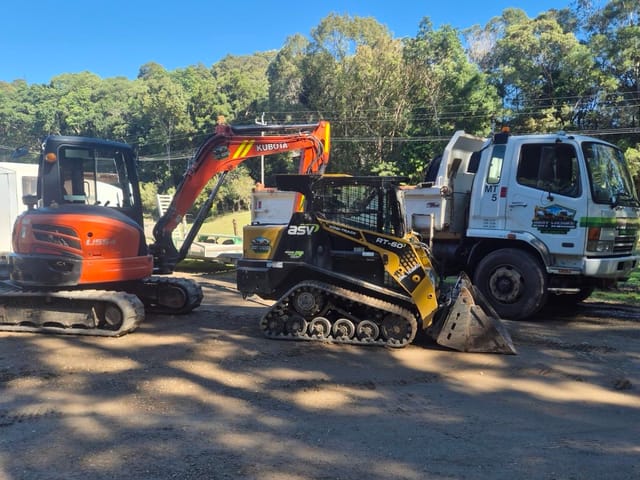
Hire a 5.5 t Kubota excavator, ASV posi-track and Fuso tipper with Luke operating. Gold Coast to Lennox Head.
See more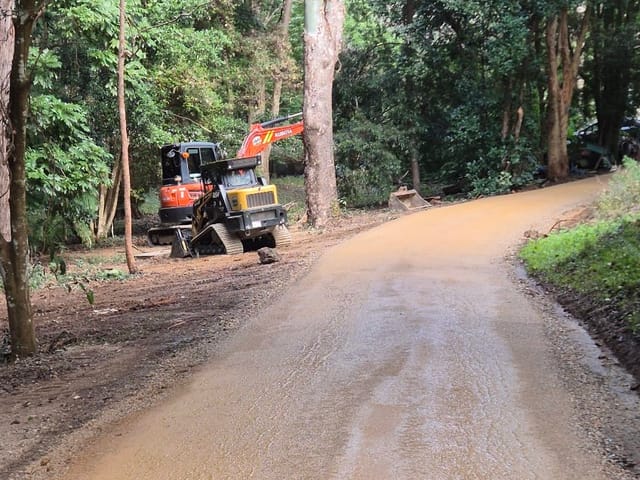
Driveway repairs
Potholes, washouts and worn gravel fixed: regrading, re-sheets and base prep for sealing. Tweed Valley and coast.
See more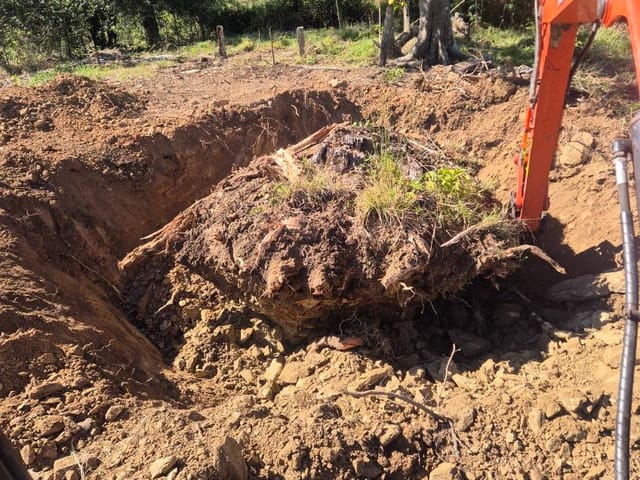
Land clearing
Land clearing, stump removal, farm dams, creek crossings and access tracks across the Tweed and Northern Rivers.
See more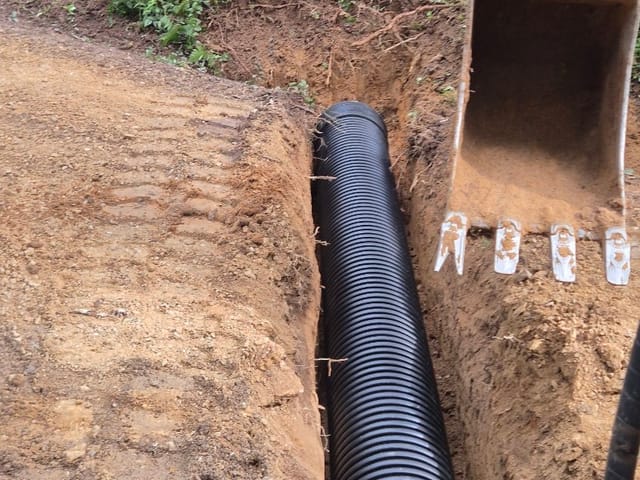
Council approval to excavate
When digging, filling or a retaining wall needs council approval in the Tweed, Byron and Ballina shires, with official sources.
See more